

Thank you for Subscribing to Auto Business Outlook Weekly Brief
Auto Business Outlook: Specials Magazine
Why Human Interaction is Important for Automotive Industry? Ian Plummer, Commercial Director, Auto Tradera Twice a year we produce the Auto Trader Market Report, our biannual review of the UK’s new and used car markets and how consumer buying and selling behaviours are changing, based on data from our marketplace of 55 million views a month. In the latest edition, we considered what’s in store for car retailing – in the UK and more broadly - and how we must adapt as an industry to capitalise on future opportunities and make the industry work better for all involved. It’s an interesting time for the automotive industry right now, and some are feeling the pressure. Although slightly buoyed by the outcome of the recent UK General Election, Brexit-related uncertainty continues to hamper consumer confidence. Both new and used car transactions in the UK remain depressed according to the Society of Motor Manufacturers and Traders (SMMT), with used car transactions falling by -0.8 per cent during the period January to September 2019, and new car registrations are down too, by -2.7 per cent year-to-date. What’s more, emissions legislation has caused supply issues. Manufacturers are having to spend enormous amounts on R&D for electric vehicles (EVs). And retailers are experiencing margin pressure from rising labour, property and tax costs as well as facing challenges from manufacturers looking to evolve their network strategies. If that wasn’t enough there’s increased scrutiny from the Financial Conduct Authority (FCA) around automotive finance. It doesn’t paint a particularly rosy picture. However, there remain pockets of growth. For example, SUVs have grown significantly in popularity, increasing sales by 279 per cent in 2018 compared with 2009 and accounting for a third of UK car sales today. And demand for EVs is growing rapidly too, with searches on our site increasing 73 per cent since November 2018. What’s more, this year the UK’s fastest sell

Dealership Authentication Platform
A customer’s journey from being a showroom visitor to a vehicle owner hinges primarily on their experience across different stages of the sales funnel. One way automotive dealers can reinforce positive customer experiences is by preemptively obtaining their credit and identity credentials in a secure and compliant manner to assess their creditworthiness early on. This translates into accelerated loan approvals, enhanced transaction efficiency, and improved sales closures. Identifying this, 700Credit, a leader in the credit service industry, strategically brings pivotal customer insights, including consumers’ credit scores and identity verification to automotive dealerships in the early stages of the sales process. Its solutions provide dealers access to customer information necessary to make the right funding decisions before initiating transactions, while closely monitoring compliance. 700Credit is the largest provider of credit reports, compliance solutions, soft pull products and identity verification & fraud detection solutions to automotive, RV, marine, and power sports dealers. Its growth is anchored in industry partnerships, with integrations extending to over 200 providers in the automotive space. “We integrate seamlessly into dealer native systems, expediting sales and compliance processes for smoother, quicker, and more effective operations,” says Ken Hill, managing director of 700Credit. Defying the Odds with Innovative Solutions With two decades of deep industry knowledge, 700Credit foresaw the shift toward prequalification—the ability to foretell an individual’s creditworthiness—in the industry and proactively offered innovative solutions to support this growing trend. One such innovation is the integration of the soft pull prequalification feature into dealership website and sales processes. Whether seamlessly incorporated into a dealership’s digital retailing solution or featured as a standalone prequalification application on the website, the integration allows potential car buyers to check their creditworthiness by providing basic demographic information, without impacting their credit score. The prequalification feature on the dealer’s website provides precise payment estimates at the beginning of the sales journey, attracting consumers browsing the site to make purchase decisions faster. Meanwhile the dealership gains valuable insights into the consumer’s credit score and existing loan balances even before the initial conversation, empowering them to make effective offers earlier in the sales process. In a notable instance, a dealership group with over 200 stores adopted 700Credit’s prequalification platform. The client reported a threefold increase in the call center’s size to handle the volume of leads generated through the websites post the platform’s implementation. Amid increased number of leads, dealers face a rising threat of fraud from customers as well as due to non-adherence to compliance. This requires them to take measures to prevent consumer-initiated fraud, such as identity forgery, while simultaneously adhering to the Federal Trade Commission’s guidelines for consumer protection. 700Credit’s QuickScan solution covers the blind spots in the digital retail processes for both consumers and dealerships. It allows clients to electronically capture their documents, store them in a secure environment, and run them through powerful likeness detection, identity verification, and synthetic ID fraud tools. This dual-purpose approach tackles fraud at the inception of the sales process while ensuring compliance with FTC regulations. Understanding the solution’s benefits, a dealership group planned to implement 700Credit’s driver’s license verification tools across their 60 stores over 3 to 4 months. The platform’s efficacy became evident on the first day of implementation in the initial store, where an attempt of fraud was successfully identified and prevented. The immediate impact led the group to accelerate the rollout plan, which 700Credit achieved within a week. Apart from these solutions, the company provides a diverse range of products including income & employment verification and compliance consulting, to simplify the journey.

Electric Vehicle Charging Solution

The rise of electric vehicles (EVs) is driving a major shift in infrastructure as cities and regions transition from traditional fuel stations to EV charging stations. In North America, ambitious government goals to cut carbon emissions are accelerating this change. Charging stations are now common at malls, offices, and public spaces. The increase in EV adoption has created a need for expanded grids, upgraded utilities, and new approaches to energy generation and storage. Though the transition is complex, the push toward a cleaner, electrified future is rapidly gaining momentum. At the forefront of this transformation is Miller Electric Company, a long-standing leader in energy and electrical infrastructure services. They focus on renewable energy integration and innovative technology to support businesses in adopting EV solutions, with a specialized public testing facility and full project management. “Our 95 years of expertise and comprehensive in-house capabilities allow us to offer a proven end-to-end approach that accelerates our clients’ electrification journey, all while keeping the future in focus,” says Kerri Stewart, Chief Strategy Officer at Miller Electric. A Scalable Workforce and Extensive Experience Miller Electric Company operates as a family-owned business and an IBEW Union shop with 20 offices across the U.S. They employ over 3,500 skilled professionals—3,000 of whom are licensed electricians. This extensive team of skilled trade professionals gives the company the ability to scale quickly for large projects such as data centers, healthcare facilities, and advanced manufacturing construction. Miller Electric handles projects of all sizes in the EV charging space and focuses on serving industries where energy and technology are essential to delivering exceptional value to critical projects. Miller Electric Company offers full lifecycle project management for EV charging infrastructure, providing support at every stage of the project journey—from consultation to design, engineering, and installation. Miller Electric’s consultative approach helps clients, from property owners to charge point operators with networks across North America, navigate the requirements of EV installations. This early involvement minimizes delays and ensures optimal outcomes. Miller Electric also manages permitting, utility coordination, regulatory compliance, equipment procurement, and ongoing maintenance to ensure the long-term success of the infrastructure they build.
Automotive Ads Campaign Management Service
The automotive industry needs more than just a quick tune-up to stay ahead in the digital race—they need an expert who knows how to transform online obscurity into digital dominance. That PPC Guy is that expert, successfully enhancing the visibility for dealerships, independent shops, and auto parts stores. Led by owner Justin Golden, That PPC Guy builds on his background as a successful automotive business owner and a corporate marketer with more than 15 years of experience. The dual perspective enables the company to garner valuable insights into the challenges automotive businesses face and offer tailored strategies that truly resonate with them. Golden’s passion for driving results ensures that clients gain visibility and achieve lasting success in the digital space. Whether optimizing budgets or maximizing ROI, he has the tools and strategies to help businesses excel

CXO INSIGHTS
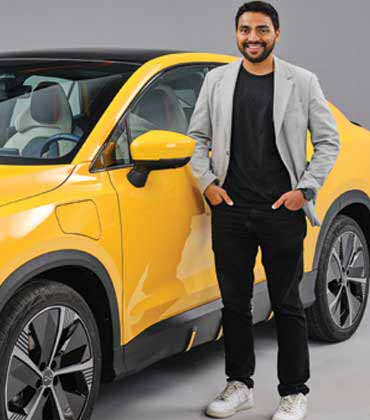
Reshaping the Future of Mobility with Automotive Technology
Zeeshan Shaikh, Engineering Manager - Tech Center EU, Aiways
Automation of Production through MES: Challenges and Opportunities
Johannes Moritzhuber, Head of Process and Production Development, Doppelmayr Seilbahnen

The Key Benefits of Using 3PL Services
Rick White, Director of 3PL Services, Cardinal Global Logistics

Warehouse Automation to Support Circular Economy
Neil Shelton, Chief Strategy Officer, GXO Logistics [NYSE: GXO]

The Tire Industry Faces Massive Challenges that Only Digitalisation Can Address
Dominique Scheider, Industry Strategy Marketing Transportation, Rockwell [NYSE: ROK]


IN FOCUS
Emerging Trends in the Automotive Industry
The automotive industry is evolving through technology sustainability and personalisation, reshaping mobility while responding to consumer demands and enhancing the overall driving experience.

Driving Forces Behind the Transformation of the Automotive Industry
The automotive industry is poised for a significant transformation, driven by several key factors.
EDITORIAL
Transforming the Future of Mobility with Innovations and Sustainability
The automotive industry in Europe is undergoing significant transformation, driven by rapidly evolving regulations, technological innovations and shifting consumer preferences. In 2025, the market dynamics are expected to undergo further changes, expanding in response to various pressures and opportunities. These developments will reshape how vehicles are designed, produced, and consumed across the continent.
As advancements in technology accelerate, the automotive sector has been at the forefront of their adoption. One of the most significant innovations is the progress toward fully autonomous driving. European manufacturers are investing heavily in AI, sensor technologies like LiDAR, and real-time data processing to make self-driving cars safer and highly reliable. Vehicle-to-everything (V2X) communication will further enhance the safety and reliability of these automobiles by enabling seamless communication between them, with surrounding infrastructure, and with pedestrians.
A key trend influencing the European automotive industry today is the ongoing push toward electrification. The transition to EVs remains a central focus, with governments and automakers investing heavily in the vehicles’ development and production. This shift toward cleaner technologies is largely driven by the European Union’s strict regulations and standards on carbon dioxide emissions.
Governments across the continent have also been offering numerous incentives to automobile manufacturers, encouraging them to source raw materials responsibly and adopt more eco-friendly production practices. Financial subsidies, tax breaks, and grants for purchasing EVs are also widely available across Europe, making electric cars even more accessible. As Sustainability becomes a key focus for European automakers, so does the increased use of recycled plastics, bio-based materials, and lightweight composites. These eco-friendly materials help manufacturers reduce their environmental footprint while improving vehicle performance and efficiency significantly. These sustainable and innovative technological trends showcase that the future of the automotive industry looks promising for generations to come.
