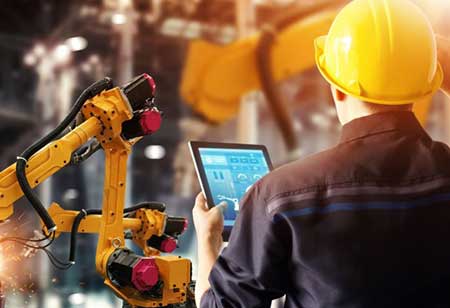
Digitalization is transforming production processes worldwide, paving the way for a connected, automated future in industry. Companies that monitor their manufacturing processes in real time, improve efficiency, and respond flexibly to changes gain a clear competitive advantage. A key component of this development is digital product features, which precisely define both each product and its manufacturing process through generically generated digital workflows, thus enabling the automation of complex production processes.
Practical Implementation: Our Approach as A Plant Manufacturer
As a plant manufacturer that develops customized solutions globally, adhering to the highest safety and quality standards, we too are facing these new challenges. Our past successes have established us as a technology leader in our market segment, but digitalization demands new strategies. Those who best master these challenges will continue to dominate the market in the future. Therefore, we are working intensively to successfully implement the digital transformation and secure our market leadership.
In this article, we demonstrate how our company is overcoming these hurdles to make the production of the future more efficient and flexible today. Our goal is ambitious, but we are confident that we will achieve it. Below, we outline our approaches and the insights we have gained along the way.
The Role of Mes In Modern Production
Digital product features are key to connected manufacturing, especially on the shop floor, the production environment of a company. Here, our Manufacturing Execution System (MES) plays a crucial role by bridging the gap between the planning data of the ERP system and physical production. MES systems not only enable the monitoring of production processes but also their dynamic planning and optimization based on available resources.
A significant advantage of MES systems lies in their ability to make production processes more precise and efficient through the use of algorithms. This allows manufacturing to be controlled in real time, ensuring optimal results even in complex production chains.
Limitations Of Traditional Production Processes
Despite technological advances, challenges remain that limit the full benefits of modern systems:
• Complexity of manual processes: Production parameters, such as machine settings and manufacturing steps, are often still set manually, increasing the risk of errors and leading to inefficient operations—especially with complex or highly varied products.
• Lack of integration between the shop floor and ERP systems: A seamless connection between production and ERP systems is often insufficient, resulting in a lack of real-time data and inefficient decision-making processes.
Companies that successfully implement MES systems can manage their production processes more precisely, minimize errors, and respond flexibly to changes.
• Limited flexibility for short-term changes: Dynamic adjustments, such as those required due to material shortages or customer demands, are often difficult to implement. Traditional processes offer only limited flexibility for spontaneous changes, leading to delays and increased costs.
Why Automation Is Essential
The increasing complexity of manufacturing demands greater automation. Only by using automated systems controlled through MES can companies ensure efficiency and flexibility while reducing the workload of their employees. Automation does not mean replacing humans but supporting them and creating smarter production processes. However, it is crucial that the underlying processes are already optimized— digitalization alone does not improve an inefficient process but can later optimally support process improvements.
During the introduction of new technologies, we encountered initial acceptance issues among our employees, particularly during the Proof-of-Concept (PoC) phase. Active change management was necessary to alleviate concerns and achieve broad acceptance. Only through targeted dialogue and employee involvement were we able to successfully integrate the workforce into the transformation process.
The Key to The Future: Digital Product Features
Digital product features are far more than mere data. A few years ago, this concept was met with skepticism because the potential of these features was not fully understood. Today, their value is undeniable. But why are these features so important?
They encompass all relevant information about a product— from materials and processing steps to tolerances and surface treatments. This data is managed in Product Lifecycle Management (PLM) or Product Data Management (PDM) systems and used throughout the value chain.
Automated Process Definition Through Digital Features
Our MES system now uses digital product features to automatically define and control production processes. Knowledge graphs, which operate outside the MES, are utilized in this process. These enable the analysis of complex relationships and the automatic generation of process definitions. This knowledge was gained through process analysis and close collaboration with skilled workers.
This method is a crucial step in realizing the full potential of digital product features. While this article focuses on production, it is important to note that these features can also be used in other areas, allowing for comprehensive integration into all business systems.
A Practical Example:
Our products are used globally, and varying national regulations and customer requirements necessitate customized manufacturing processes. Previously, extensive expertise was required to meet these demands promptly. Today, we are reaching the limits of what can be achieved through human labor alone. This is where the true value of automation becomes apparent.
Benefits of Automated Process Definition
Automating production processes through MES offers numerous advantages:
• Reduction of manual interventions: Production parameters are automatically derived from digital product features, reducing manual effort and minimizing errors.
• Rapid adjustments to changes: Real-time data enables processes to be adjusted without interrupting the entire production chain.
• Increased efficiency: The precise control of production parameters ensures optimal machine utilization, reduces material waste, and minimizes downtime.
• Transparency and traceability: MES systems provide real-time data across the entire production process, enabling seamless traceability and improved quality assurance.
Conclusion: The Path to Flexible And Efficient Production
The future of production lies in intelligent automation, supported by knowledge graphs and digital product features. Companies that successfully implement MES systems can manage their production processes more precisely, minimize errors, and respond flexibly to changes. These technologies not only offer a technological advantage but also ensure long-term competitiveness in an increasingly digitalized industry. We are committed to maintaining and expanding our market position in the digital age with our strategy.