

Thank you for Subscribing to Auto Business Outlook Weekly Brief
Auto Business Outlook: Specials Magazine
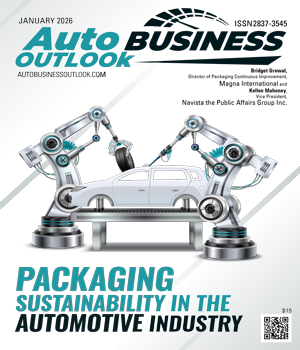
Minimizing waste and striving toward zero waste to landfill has been a priority for the U.S. automotive industry for decades. As we look to the next generation of industry sustainability ambitions, we have seen that many of the leading automotive manufacturers and suppliers are working to build on that history of success and are swiftly amplifying commitments to the use of sustainable practices and materials in the production and content of their products, and packaging. Within the industry association Suppliers Partnership for the Environment (SP), automakers and their suppliers are coming together to collaborate on such automotive industry sustainability goals and to work to advance action on the path towards the industry’s carbon neutral, circular, and sustainable ambitions. In recent months the SP organization has developed new industry guidelines on key topics such as tracking and reducing carbon within the automotive supply chain, measuring the use of recycled and renewable materials in automotive products, and handling EV batteries for recycling or reuse. Under the SP umbrella, we are leading a team of sustainability and packaging experts from across automakers, their tiered suppliers and packaging vendors, and recyclers, working to tackle another important issue – minimizing the environmental impact of the packaging materials required to ship automotive parts damage free along the supply chain. Companies, big and small, from each segment of the value chain have joined us to share their knowledge and lessons learned, and to co-develop new ideas and solutions to improve packaging sustainability.
Top Autonomous Car Care Services 2026
While most discussions about autonomous vehicles focus on the cars themselves, long-term profitability depends on building a robust operational backbone—one that reduces operating costs and maximizes uptime for robotaxi and autonomous fleets. Behind the scenes, JetX is building the infrastructure that autonomous fleets depend on to operate with minimal interruption, optimized economics, and long-term commercial sustainability. The company is building the “physical intelligence layer” that enables autonomous vehicles, from robotaxis to privately owned cars, to perform critical tasks such as charging, cleaning, and diagnostics with minimal human involvement. This infrastructure is quickly becoming indispensable as the world moves toward fully autonomous transportation, and JetX is ensuring that it evolves in a way that is scalable, cost-effective, and reliable. At the heart of JetX’s solutions is a platform that seamlessly integrates robotics, IoT, and fleet management software. By automating tasks such as robotic charging, autonomous washing, and real-time diagnostics, the company is helping fleets operate efficiently, even in the most demanding environments. Its systems ensure that autonomous vehicles can take care of themselves, from charging to cleaning, without the need for human intervention. This level of automation is vital for the commercial viability of autonomous fleets, which struggle with operational costs when vehicles are left idle for maintenance tasks. “We are revolutionizing vehicle services,” says Frank Rexach, president of JetX, highlighting the company’s role in transforming vehicle care. JetX’s core solutions, such as the JetX Energy Arm (robotic charging), a range of JetX Car Washing solutions (sensor-safe cleaning), and FleetCare (predictive maintenance and intelligent scheduling), are built to work together within a single integrated platform. These solutions are not only for robotaxis; they will soon be available to everyday drivers, enabling them to send their cars off to clean and charge themselves while they go about their day. The company’s impact is already being felt on a global scale. JetX has established live deployments in Asia with industry leaders such as Didi and Pony AI. In Didi’s robotaxi operations, JetX’s sensor-safe cleaning systems have reduced costly downtime caused by damaged sensors, including LiDAR, which is critical for autonomous driving..

Automotive Business Development Solutions Provider

If you’ve been in the automotive industry for any length of time, you already know how challenging it is to keep up with customer expectations. The modern customer wants fast, seamless interactions, whether they’re shopping for a car, scheduling a service appointment, or simply looking for information. The problem, however, is that most dealerships don’t have the manpower to respond instantly to every lead, answer every phone call, and meet the growing demand for fast, effective customer service. That’s where Better Car People comes in. Since its founding in 2010, Better Car People has been dedicated to helping dealerships connect with customers in a way that is both efficient and professional. But what truly sets the company apart is that it doesn’t rely solely on automation or artificial intelligence. Instead, Better Car People focuses on blending advanced technology with real human intelligence to create an experience that feels personal and engaging. Recently, Better Car People took a major step forward with the acquisition of Proactive Dealer Solutions, a company with over 30 years of experience in automotive sales and service training. This move signals a new era for Better Car People, as it now has the resources and expertise to provide dealerships with a level of service that goes beyond simple automation. By combining cutting-edge AI, highly efficient automation, and trained human agents, the company has built a system that helps dealerships capture more leads, schedule more service appointments, and increase overall sales without placing additional burdens on their staff. “We are addressing one of the most significant pain points in the industry today: the challenge of responding to customer inquiries quickly and effectively,” says Syl Raymond, Chief Strategy Officer of Better Car People. “In an environment where slow response times can mean lost sales, having a solution that guarantees fast and high-quality engagement is a game changer.” Meeting Customer Expectations in a 24/7 Digital World Running a dealership today is far more complicated than it was even a decade ago. With the rise of digital communication, customer expectations have evolved dramatically. No longer do people wait patiently for a callback or assume that a delay in response is normal. Instead, they expect immediate engagement, whether it’s through email, text, or phone calls.
Automotive Port Logistics Service
Automotive supply chains are rarely predictable. Weather delays, port congestion, regulatory changes, or sudden volume spikes can disrupt production and delay dealership deliveries. Each delay sends ripples through the entire network. OEMs face this pressure daily and need more than just a service provider—they need a flexible, fast-moving partner who understands every link in the chain and can adapt in real time to keep vehicles moving without interruption. AMPORTS steps in as more than a logistics provider—assuming full care and custody of every vehicle the moment it arrives, treating each one as its own, and guiding it through every phase until delivery. The company processes, stores, and transports vehicles for major OEMs across North America. It inspects, accessorizes, and prepares vehicles arriving by ship, truck, or rail, ensuring that each one reaches the dealership in perfect condition. Every vehicle undergoes a full inspection. If the automaker requests additional services such as accessory installation or minor bodywork, the vehicle is routed to the appropriate facility. Cars are stored securely until cleared for delivery, then transported via coordinated truck or rail solutions. “We provide detailed data tracking, so manufacturers know where every vehicle stands in real time,” says Vee Kachroo, CEO. Amports’ operations span 13 strategically located facilities across the U.S. and Mexico, all with direct access to highways and rail. The company is certified to perform technical services for manufacturers like GM, VW, and Stellantis, and is trusted to do so at scale. With over 1,500 acres of operational space, Amports can absorb shipment surges, buffer against port disruptions, and hold inventory when vehicles are rerouted or delayed. The company has also expanded into adjacent services such as intermodal logistics and stevedoring, assuming greater responsibility within the supply chain so OEMs don’t have to manage multiple vendors. A standout example is Amports’ heat treatment program for vehicles bound for Australia and New Zealand. These countries have strict biosecurity laws prohibiting the entry of seeds, insects, or organic debris. Amports heat-treats vehicles to kill potential contaminants, vacuums underneath, and inspects every panel to ensure compliance. This helps automakers avoid costly delays or rejections upon arrival.
CXO INSIGHTS

Leadership in Manufacturing
Michael Spliedt, Senior Engineering Manager, Yanfeng Global Automotive Interiors

Artificial Intelligence and Automotive Engineering: Generative Design and the AI-Defined Vehicle
Brendan J. Chan, Ph.D., Sr. Chief Engineer – Autonomy and Active Safety, Oshkosh Corporation [NYSE: OSK]

Exploring The Future of Automobile Industry
Terrance H. Slaughter, Plant Production Manager, Toyota North America [NYSE: TYO]

Aiming for an Energy-Efficient World
Trent Randles, Engineering Manager, BorgWarner [NYSE: BWA]

Guiding Retail Teams Through Continuous Transformation
Monica Villela Millan, Head of Retail Training, Mercedes-Benz USA [MBGAF:OTCPK]


IN FOCUS
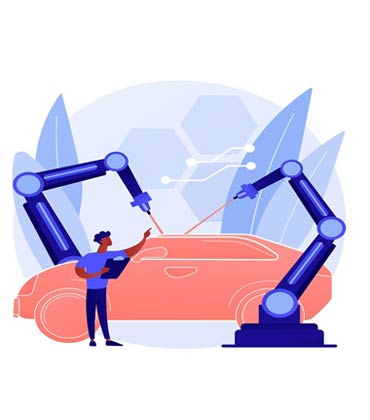
Driving the Future of the Autonomous Car Care Market
The autonomous car care market grows through electric and self-driving adoption, sensor and AI advancements, and digital services while tackling regulation, infrastructure, and safety for broad deployment.
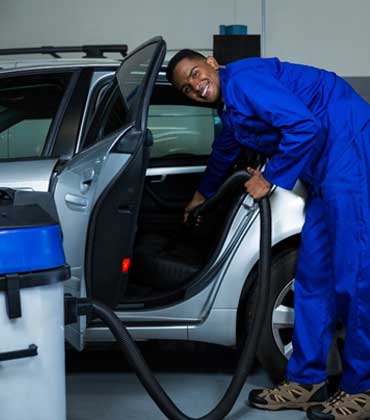
Autonomous Car Care Services: Robotics and AI-Driven Maintenance
Autonomous car care services use sensors, AI, robotics, and smart infrastructure to deliver predictive maintenance, automated servicing, and improved vehicle reliability.
EDITORIAL
The Evolution of Autonomous Car Care in the U.S.
This edition of Auto Business Outlook explores the transformation of autonomous car care services in the U.S., spotlighting how automation, data intelligence, and adaptive infrastructure are reshaping vehicle maintenance and fleet resilience in 2026.
At the center of this transformation is JetX, a company redefining the autonomous vehicle era. JetX has positioned itself as the backbone of self-sufficient mobility by creating the infrastructure that keeps autonomous fleets operational, efficient, and service-ready. Through the integration of robotics, IoT, and intelligent fleet orchestration, the company enables robotaxis, logistics providers, and private vehicles to autonomously charge, clean, and maintain themselves, delivering the powerful combination of higher uptime, lower lifecycle costs, and sustainable deployment.
This momentum mirrors the broader evolution across the mobility ecosystem. Throughout 2025, the industry grappled with volatile energy prices, data standardization hurdles, and regulatory ambiguity. Yet collaboration among automakers, technology providers, and mobility platforms helped the sector mature, leveraging analytics, connected ecosystems, and predictive maintenance to overcome fragmentation and unlock scalable, commercially viable models.
Building on this industry-wide shift toward intelligence-driven mobility, this issue brings in voices from the front lines of execution. Sacha Porges, Global Director - Lead Customer Quality & New Programs at GKN Automotive, and Michael Cavaretta, Analytics Executive - Quality Analytics at Ford Motor Company [NYSE: F], offer grounded perspectives on how intelligent design, supply chain analytics, and autonomous service innovation are converging to turn operational complexity into competitive advantage.
As 2026 unfolds, the autonomous car care sector stands at the threshold of a defining year—one where automation meets infrastructure and service intelligence emerges as the driving force behind the next era of mobility performance.
